

Hello everyone!
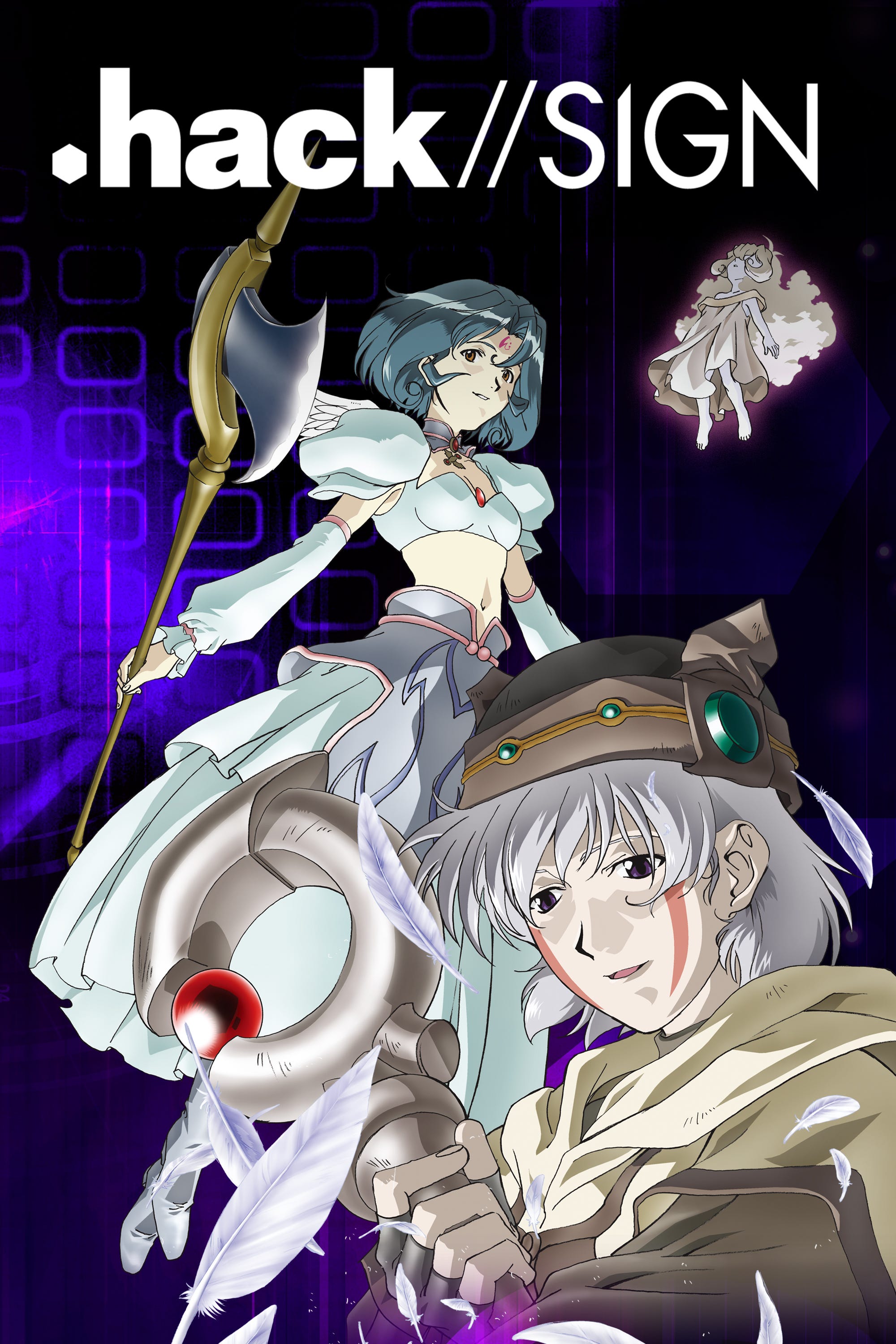
This post marks the start of Samantha’s Other Interests, a space for me to discuss and gush about my favorite things that aren’t Yuri manga! I hope this page can be a place where I can share important parts of myself through the media I’ve held dear to me over the years. Although I didn’t really plan it this way, the show I’ll be discussing could be considered the starting point to my journey through anime, manga, and Yuri, and for that, I’ll be forever grateful. Without further delay, let me introduce you to my experience of .Hack//SIGN, the anime that I will adore and cherish for my entire life, even if most people find it middling, slow, and boring.
Introduction
I first watched .Hack//SIGN (pronounced as Dot Hack Sign) when I was around thirteen years old. My brother had somehow gotten interested in the .Hack franchise, so he and I watched .Hack//SIGN together, and even at such a young age, I was enthralled. My experience with anime had only been Shonen shows, like Dragonball Z and Naruto, but even then, I never registered them as Anime, just cartoons that aired on Toonami. Something about .Hack//SIGN felt so different, like I was experiencing something much larger and more incomprehensible than anything I had seen before it. Each line of dialogue had me wondering what meaning they held and what the characters were really like beyond their facades. After watching all the way through, I was left confused, but utterly star struck. I learned that .Hack//SIGN was only one piece of a larger narrative told over books, shows, and games, and from there, I knew I needed more.
I got on my computer and I found the soundtrack, composed by the legendary Yuki Kajiura, and listened to it religiously to hold onto those feelings. My brother got .Hack//GU Reminisce on the PS2, but it felt so foreign to what I felt watching .Hack//SIGN. Turns out, it was the second volume of the sequel series to the original quartet of .Hack games, referred to as .Hack//IMOQ. Given that .Hack//SIGN was the prequel to .Hack//IMOQ, I knew I needed to go back and get the original games to piece together the greater story. Through all of this, I was not only hooked into the .Hack franchise, but hooked into anime as a whole. Funny enough, Yuki Kajiura’s music would become the roadmap to the anime I watched throughout my childhood, so, look forward to hearing her name crop up time and time again in various posts I make.
Over the years of enjoying the .Hack franchise through all its various mediums, I always find myself drawn back to .Hack//SIGN, so I recently revisited it in order to try and finally understand it all. Even over 20 years since the series originally aired, I can confidently say that .Hack//SIGN is one of the most intellectual, mysterious, and passion-filled anime of its time.
Background
The .Hack Franchise is fairly hard to research when it comes to the specifics of who was behind it, but it was created by the Japanese developer CyberConnect 2 in the early 2000’s. The series appeared to be designed as a multimedia franchise from the start, with .Hack//SIGN being released first in Japan in 2002, with .Hack//Infection (the first game of .Hack//IMOQ) being released very shortly after. The release was mimicked in 2003 for North America, and then again in 2004 for the European release.
The Story
.Hack//SIGN takes place in 2009 within an alternate future, where the online game called The World is one of the most popular MMORPGs. Unlike typical games, this game is played through a mysterious VR headset and a standard controller, like you would see for a PS2. The series, to my knowledge, doesn’t make it entirely clear what the headset is capable of or how it really works, but in practice, it makes The World feel incredibly immersive and interactable.
The show starts with Tsukasa, a player in The World, waking up under mysterious circumstances within the game. He stumbles across a few players who inquire about his abilities and why he’s acting weird, and he soon learns that he is not only unable to log out of the game, but is no longer sitting in front of his computer and holding a controller. His consciousness is within the game.
From here, .Hack//SIGN turns into a psychological story about human connection, games as an escape, and the intensely mysterious functions of a game world that go beyond a mere game. Each player we spend time with through the show has a story behind their real selves, a reason to play the game in the way that they do, and struggles they must face in order to connect with others in a meaningful way. Through their interactions, connections, and interpersonal conflicts, we see them question the circumstances they find themselves in, question their own motivations, and inevitably grow and change.
While many characters find themselves in difficult circumstances, .Hack//SIGN, at its core, is about hope in the future, hope in the connections, and hope in the digital realm of the internet. This story really grapples with what online spaces mean for real interpersonal relationships and the humanity of the characters who play there, and while we see characters land on different opinions about how the game should be approached and played, none of them are ultimately depicted as wrong. Everyone approaches things differently, and once they find the way that brings them fulfillment, that is what makes their approach right for them.
Visuals
The story and themes are what carry .Hack//SIGN, but the animation is what drags it down the most. Character models feel like they are animated off model half the time, weapon sizes fluctuate drastically, and facial expressions can sometimes be quite awkward. Most of the run time of the show is characters standing around and talking, which is fitting for such a character driven, mysterious, and psychological story, but some people still find it incredibly drab and a major turn off. Unlike the animation, the background art is amazing, visually and thematically. Each environment feels mysterious, somewhat randomly generated, and perfectly fitting for the underlying game mechanics of The World. On their own, these backgrounds may not feel fantastic, but when you know how the game works from playing .Hack//IMOQ, it really captures that same feeling.
The music
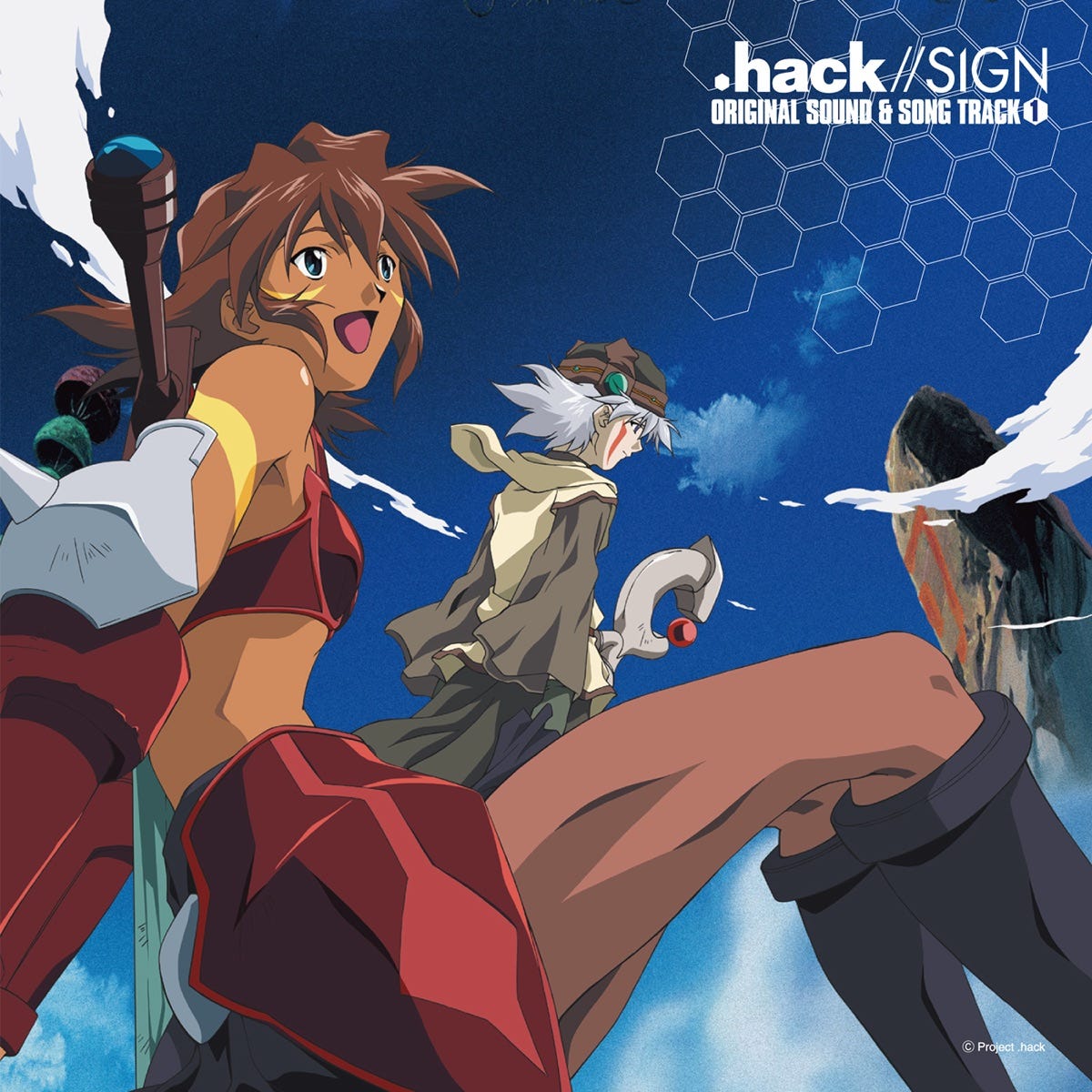
The last thing to gush about is the music for this series. Yuki Kajiura, the absolute legend, composed one of the most emotional, mysterious, and compelling soundtracks in her career for this show. It knows exactly how to express the mixed emotions of despair, hope, and fun that this series deserves. So many tracks resonate with the characters and their struggles, and the instrumentation mixes with the visual atmosphere in incredible ways that make me tear up.
Spoiler Territory
Up to this point, I’ve been keeping things pretty vague to avoid spoilers. This is the point where I’m gonna gush about specifics, so please consider clicking off and watching the show if you are intrigued.
Characters
Tsukasa is definitely a fantastic main character with lots of complex backstory leading him to distrust and avoid others to protect himself. The abuse from his father, the loss of his mother, and the isolation he felt through his childhood really resonate with his actions inside The World. When he is offered power, protection, and safety from a mysterious being within the game, of course he is going to take it and use it to his advantage. Only when he is manipulated and betrayed by this being does he begin to crave connection with the players he has met in the game, and because of their growth, they are able to be there for him and help him learn to trust them and not push them away. Ultimately, his journey from start to finish is the glue that holds together every character we meet and is the catalyst to their developments as people.
Mimiru meets Tsukasa first, and he annoys the hell out of her. But when she learns of his plight, she can’t help but want to know how he is doing and be there for him, especially after her run in with A20, reminding her of her desire to see things through to the end. She might be a highschooler, and she might not be the most logically sound character in our group, but her desire to connect and understand Tsukasa is what really drives him to spend time with her.
Bear’s curiosity and thirst for knowledge, along with his paternal instincts, leads him to dig for answers and try to unravel the mystery. Bear ends up feeling a strong sense of fatherly duty toward Tsukasa, in light of his failings with his own son, and ends up deciding to be Tsukasa’s guardian when he finally logs out. Given Tsukasa’s family situation, this plays a big part in Tsukasa’s decision to return to reality. Bear’s intellect helps to push the mystery forward, and while his emotional intelligence can vary, he tends to be the person everyone goes to for advice.
BT plays the game in hopes of gaining power and respect for her intelligence, and as she makes deals and trades information, she has to question her ethics and if she wants to use her friends like pawns for power, or form meaningful connections. She also faces the fact that she hungers for romance in reality and uses the game as an avenue to do so, even though she always preaches that it’s just a game and should never encroach on reality. Her character is complicated and she contradicts herself at times, but even when she fluctuates between enemy and ally, I can't help but feel for her search for meaning and connection.
We see Krim, one of the most powerful players in our group, roleplay as a hero of justice and form the Crimson Knights with Subaru, only to leave it when it stops being fun for him. When he gets involved with Tsukasa, he finally is invigorated by the sense of adventure and his desire for justice, and he continues to do what he feels is right and fun. We get glimpses of his real personality at times, and while he plays aloof, he genuinely cares for his friends and wants to see them be the best versions of themselves. His comments to Subaru and Tsukasa are especially moving, encouraging them to stand proud and look ahead so they get the respect they deserve. He firmly believes that everyone should stand up for themselves and what they want to do.
Subaru, the sole leader of the Crimson Knights during the show, has to come to terms with her desire to enjoy the game or uphold the justice she came to hold dear from Krim. We see her strong connection with Tsukasa form, her feelings of justice with the Crimson Knights waver, and her eventual choice to stand with Tsukasa, disband the knights, and play the game on her own terms. She realizes that her ideals are impossible to hold over the players of The World, and that it is more important to cherish those she cares about than to continue to uphold a group of justice enforcement that keeps her isolated from everyone. She decides to no longer be Subaru of the Crimson Knights, but just Subaru, even if it causes her pain or sorrow.
Then we have Sora, the player killer who harasses women for their member addresses and backstabs people when it’s convenient for him. Through Tsukasa’s plight, he hungers for power and thrills, betraying allies, changing sides over and over, and jumping around like a goofy kid every time on screen. While he spends almost all his time causing trouble, in the final episodes, he puts himself in danger to protect Tsukasa and Subaru from the being within the game, and he ends up paying a heavy toll for doing so. In the Epilogue, we see him up to his old shenanigans, but we also see him grappling with the guilt of what he had done to everyone while they fought for Tsukasa’s wellbeing. Even through it all, he did the right thing at the most important moment, and for that, Tsukasa urges him to join their celebration of victory.
We also get to meet Silver Knight, a man who upholds justice for the Crimson Knights under Subaru, many times through unjust means. We see him fall from grace, question his sense of duty, and eventually uphold justice, no longer through the power of administrative powers and brute force, but with his own abilities as a player within the game. He may have failed to serve as a Crimson Knight, but as Silver Knight, he does what he can to help others and plays the game on his own terms.
All of these characters start by acting for themselves, but as they get involved with Tsukasa’s situation, they begin to see each other, not as other players, but as real people who want to help and do what they can. We get glimpses of who they are in the real world, whether it’s their job, their school, their social lives, or the conflicts they experience outside the game. Each episode feels like a chance to unravel the facades of these people and learn more about them and what makes them tick. Sometimes they talk about mundane things in their lives, like getting tea, needing to go to bed, or how old they are. Other times, we see them go away from their headsets for a second, only to get startled by someone peering at them as soon as they come back. All of this stuff comes back around, not only to make characters and world feel well rounded, but to make Tsukasa’s plight so much more intriguing.
Tsukasa’s past is deeply sad, but within the game, Tsukasa can’t share in the real world experiences of the others. He is always there, unable to leave, not needing to sleep or eat or drink. He feels pain, he feels the warmth of the other players, and he has abilities that go against the rules of the game. These powers start by getting him into trouble and making him a wanted player, but soon, everyone starts to realize that Tsukasa is not the villain, but a victim of a greater threat. These abilities are given to him by Morganna, the entity within the game who trapped him there in the first place, and the true villain.
We get to hear Morganna quite early on, and she manipulates Tsukasa from the start. She pretends to be his mother, there to care for him and make him happy. Soon, she begins to use his happiness to make him fall into despair. She alters his memories, kills him within the game only to revive him with less of himself intact, and turns against him in order to reach her true goal of destroying another being called Aura.
Aura is the primary mystery of the show. Our cast of characters, after meeting and understanding some of Tsukasa’s plight, start to search for The Key of the Twilight, the legendary item thought to overturn the laws of the game. Their search leads them to meeting a memory fragment of the creator of the game, Herald Hoerwick, who vaguely explains that the game was made with the intention of birthing an AI to act as the caretaker of The World and as his daughter with his beloved. He created Morganna to care for Aura and birth her, but Morganna refused her role and decided to destroy Aura and rule The World herself. While her intentions outside of this are unknown in .Hack//SIGN, we know that she is able to pull the consciousness of a player into the game, putting their real body in a coma.
Some Lore
This story, while full of anxiety, abuse, terrifying stakes, and difficult human connections, is ultimately about hope. In the lore of .Hack, the internet suffered serious issues during its first couple decades. In 2003, a virus called “Deadly Flash” infected 10 million users’ computers and led to countless deaths via epilepsy. The creator of the virus was sentenced to death for cyber crime. In 2004, Millions of dollars were stolen from a bank in Switzerland by a hacker. The internet was rampant with crime, but was also being connected to every system in the world to help modernize and control systems with ease. In 2005, the internet went dark for over an hour, stopping every system in its tracks and causing absolute chaos across the planet. The incident was called Pluto's Kiss, and was caused by a ten year old boy. After this, internet access is restricted to necessary staff and agencies, with no public access allowed.
Over the next years, access is slowly restored and repairs are made, leading to the present of the story, where online gaming has only been back for a while and there are few games to even play. Everyone in this world has a history with the internet being turned against them, but The World is designed to be different. The World is designed to be the birthplace of hope, through Aura. Morganna brought Tsukasa into The World to destroy Aura through his despair, but Tsukasa’s hope is what births Aura and will bring hope to The World, and eventually the entire network. While we don’t see this outcome in .Hack//SIGN directly, it does come to fruition in the game series that released during .Hack//SIGN’s run.
The Big Twist
Now for the biggest spoiler of them all: .Hack//SIGN may actually be a Yuri after all! Turns out, Tsukasa is a girl in the real world, and Subaru, who forms a very strong connection with Tsukasa, if not kinda romantic within the game, meets up with her in real life in the final moments of episode 25. The two rush to each other, hands outstretched. As they almost touch, the screen freezes in a very foreboding manner, before cutting to the credits.
So, do I think Tsukasa and Subaru are a couple? Yeah, I kinda do! Does the cannon back this up? Not particularly, but also it doesn’t say they aren’t. Is Tsukasa transgender? The Japanese version may be different, but the English dub doesn’t lean into this at all, referring to Tsukasa as a boy, but the real life human behind him as a girl, even in the epilogue episode.
In my first viewing of the series, I didn’t find myself interpreting their relationship as overtly romantic, and I think the series tries hard to keep their romance squarely in subtext. Given it was the early 2000’s and there was a lot more to the plot than these two being a couple, I don’t mind it. But why did they have to make their first meeting so damn dramatic, only to be forebodingly undermined for seemingly no reason? Honestly, we may never know, or maybe there is more within one of the alternative mediums of .Hack that I haven’t experienced. Regardless, I have to say, I would not consider this my introduction to Yuri. That story, is for another day.
My favorite Episode
My favorite episode of .Hack//SIGN is titled Recollection, and it follows Subaru as she wanders The World after disbanding the Crimson Knights. She recalls her meeting with Krim, her forming of the Knights, Krim’s resignation, and her taking over. During this, she encounters a player who holds a grudge against her. The player doesn’t kill Subaru, but leaves her close to death, her clothes torn to shreds. Subaru stumbles into a dungeon, where Tsukasa was waiting for her on a hunch. He runs to her, asking if she is okay, and she embraces him in her vulnerable state, begging to hold him for just a little longer. He returns the hug. The episode ends with Subaru’s player in reality crying on her desk, and reveals that Subaru’s player is bound to a wheelchair. She plays the game so that she can walk and run again and meet people without the stigma of her condition. Tsukasa says, “Cry as much as you want. I’m right here.” This episode feels so visceral, and it makes me cry every time. Leaving Subaru on the brink of despair and maybe even death is just so powerful, even if it doesn’t make much sense in video game logic.
Conclusion
So yeah, .Hack//SIGN is one of my favorite anime series, and even now, all these years later, I find I love it more and more. The story is phenomenal and mysterious and thought provoking, the backgrounds are stunning, the music is perfection, and it was the perfect start to the .Hack franchise for me. Do I understand why lots of people don’t like it? Absolutely. There is little to no action, the animation is not great, and there are moments where the animation kinda works against the story, but the characters and emotion here are hard to beat.
This is nowhere near all that I have to say about the .Hack franchise, and I’ll likely be discussing one of the games and some of the books in the near future to act as companion pieces to this one. .Hack genuinely means a lot to me, and the heart and soul of the initial series will always capture my heart in ways nothing else will.